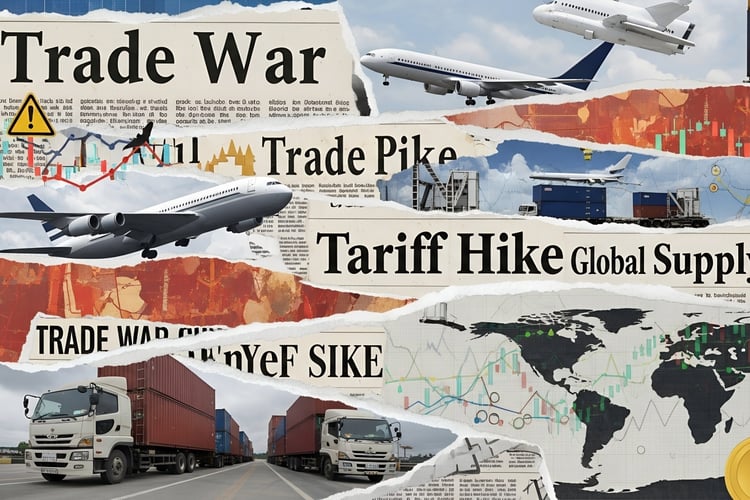

Supply Chain Stability Isn’t Just an Operations Issue Anymore
Over the past several years, supply chain disruption has shifted from an occasional operational challenge to a constant strategic concern.
Manufacturers are no longer dealing with isolated delays. They are navigating a landscape shaped by shifting United States tariff policies, fluctuating raw material availability, and ongoing global instability. What used to be a sourcing decision is now a risk management decision.
And for many, the current model is not holding up.
Where Traditional Supply Models Are Breaking Down
Most supply chains were built around cost efficiency and predictability. That worked when material flow was steady and pricing was relatively stable.
Today, those same models are being tested in new ways:
- Tariff changes are impacting the cost and availability of imported materials
- Domestic sourcing is more competitive, but also more constrained
- Lead times are inconsistent, even from long-standing suppliers
- Smaller buyers are seeing reduced priority when supply tightens
The result is a growing gap between what manufacturers need and what their supply chain can reliably deliver.
Why Size and Relationships Now Matter More Than Ever
In this environment, not all suppliers operate from the same position.
Companies with established supplier networks, long-term material agreements, and higher purchasing volume have a distinct advantage. They are often able to:
- Secure material allocations when supply is limited
- Maintain more consistent pricing structures
- Navigate tariff changes with greater flexibility
- Reduce volatility across production schedules
This is where scale and relationships begin to directly impact performance.

How Engineered Profiles Approaches Supply Chain Stability
At Engineered Profiles, supply chain strategy is built into how projects are supported from the beginning.
Through a combination of established supplier partnerships and a flexible sourcing model, EP is able to approach material procurement differently than many manufacturers.
That includes:
- Long-standing relationships with key material suppliers
- The ability to leverage purchasing volume across multiple programs
- A sourcing strategy designed to adapt to changing market conditions
- Collaboration with customers to align material selection with availability and risk
Rather than reacting to disruption, the goal is to build systems that are more resilient from the start.
You can explore more about this approach here:
https://www.engineeredprofiles.com/supply-chain-models
https://www.engineeredprofiles.com/supplier-partnerships
From Vendor to Strategic Partner
One of the biggest shifts happening right now is how manufacturers evaluate their suppliers.
It is no longer just about who can produce a component. It is about who can consistently support production over time, even when conditions change.
That requires:
- Visibility into upstream supply
- Flexibility in material sourcing
- Strong communication across all stages of production
- A partner mindset, not a transactional one
Manufacturers that prioritize these factors are finding they are better positioned to maintain output, control costs, and reduce risk.
What This Means Moving Forward
Supply chain disruption is not likely to disappear. Tariffs, global sourcing shifts, and demand fluctuations will continue to shape how materials move.
The difference will come down to how prepared manufacturers are to adapt.
Those relying on fragmented sourcing strategies may continue to face delays and cost swings. Those working with partners who bring stability, leverage, and flexibility into the process will be better positioned to stay competitive.
Closing Thought
In today’s environment, supply chain reliability is not just about avoiding problems.
It is about building an advantage.
If you’re evaluating how your current supply model holds up against today’s pressures, let’s have a conversation.
Request a Manufacturing Assessment